

A Studio Standard, Inside the Session.
The hardware behind Arcadia U7 has earned a lasting place in professional studios through its clear, extended response and unmistakably polished direct sound.
It does not transform the instrument into something else.
It adds weight without cloudiness, presence without harshness, and subtle Class A coloration that makes the source feel larger, smoother, and more complete.
Arcadia U7 brings that familiar clean preamp workflow directly into your DAW.
Version 2 - Rebuilt for Greater Accuracy.
Arcadia U7 Version 2 introduces an improved DSP model created from new measurements of the original hardware.
The Class A amplifier response has been rebuilt for more accurate saturation, gain behavior, and tonal movement across the usable range.
The result is more faithful to the hardware’s subtle character: clean and open at normal levels, with increasing warmth and harmonic density as the input is pushed.
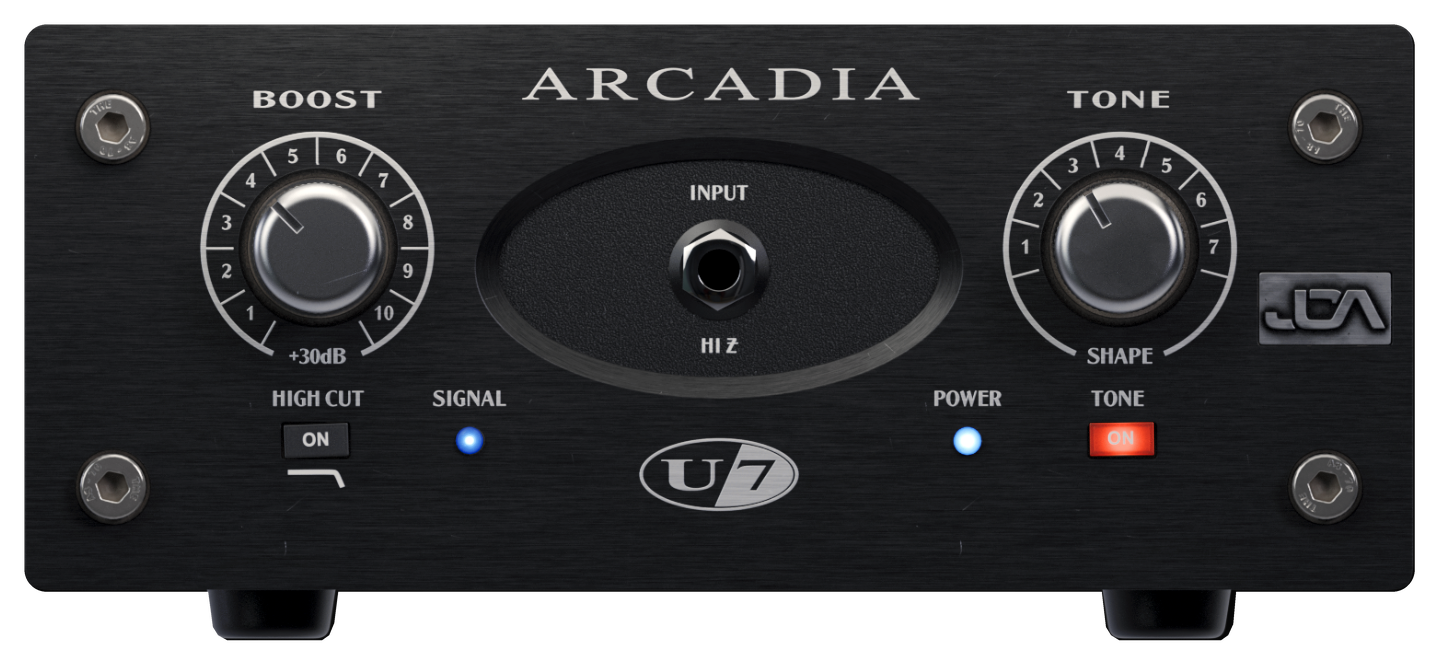
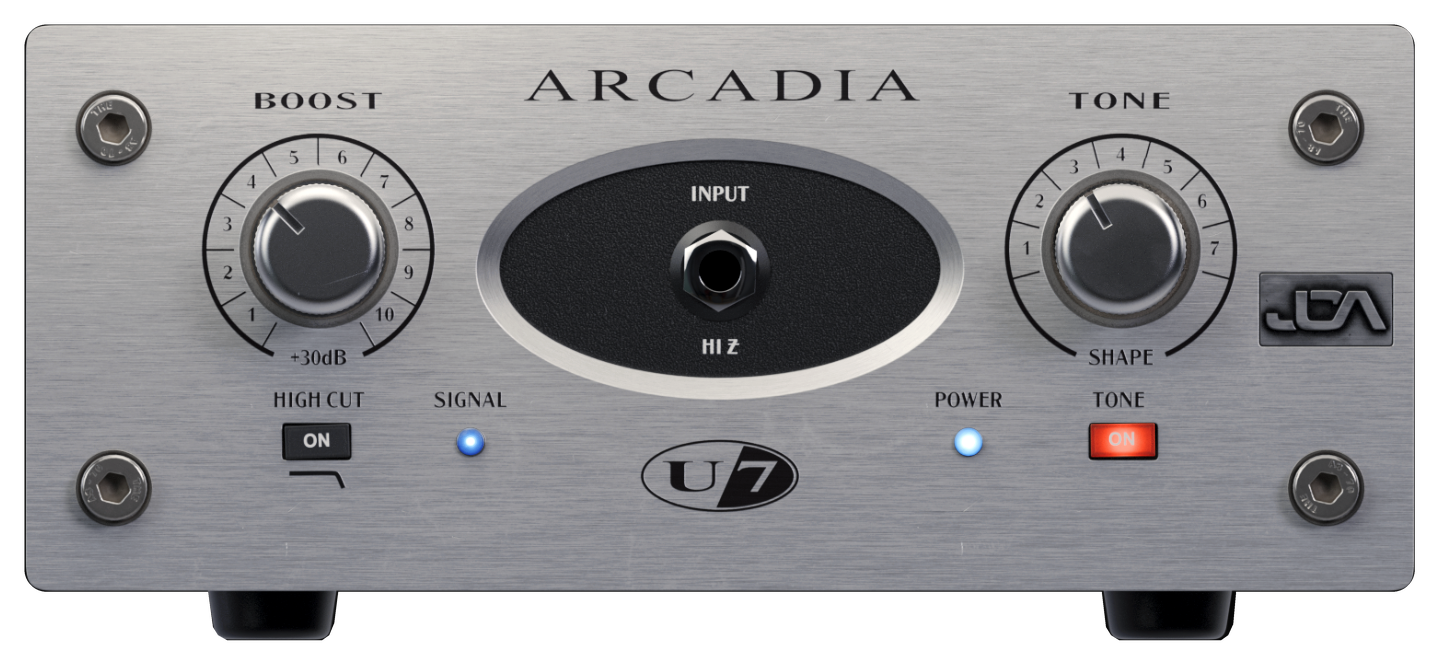
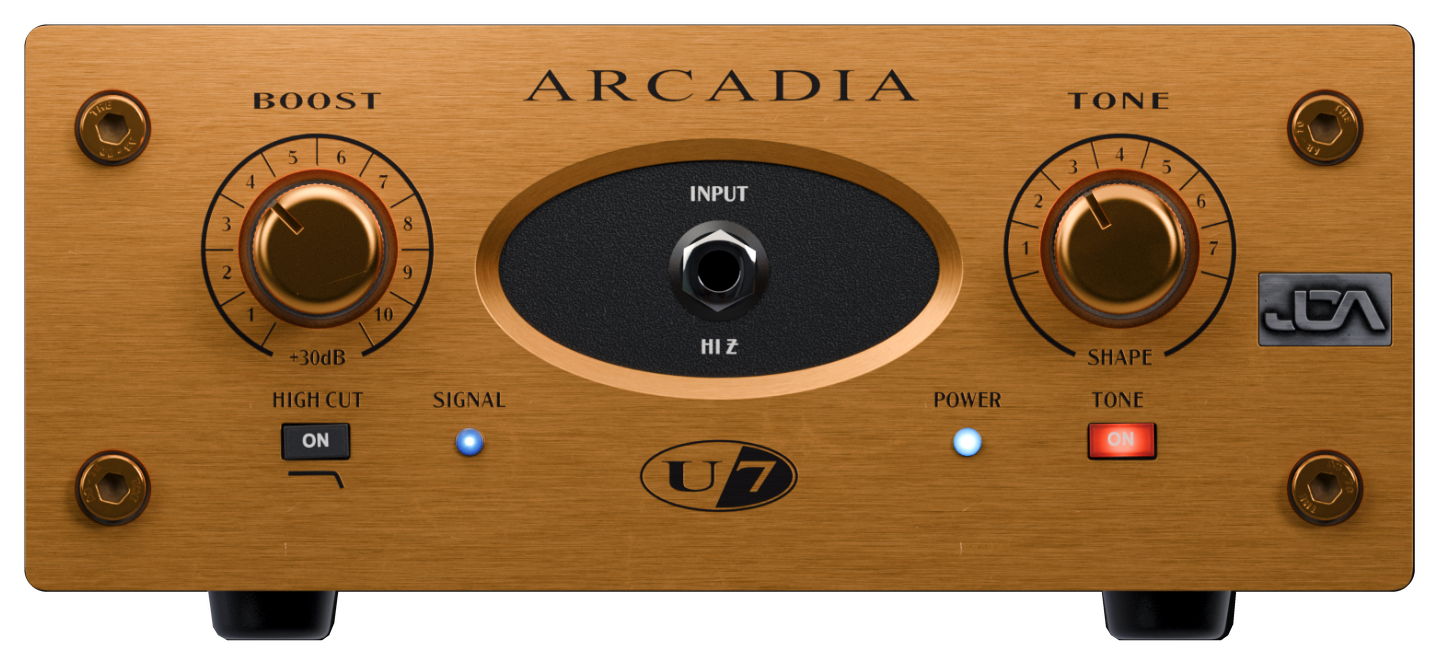
Boost
Drive the Class A Preamp.
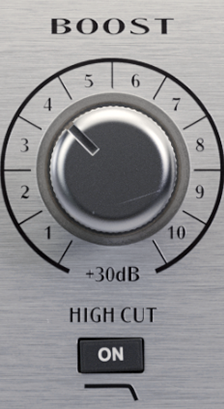
Boost controls the gain entering the modeled Class A amplifier stage.
At restrained settings, Arcadia remains clean, open, and polished. Increase Boost to add subtle harmonic density, warmth, and forward movement.
Arcadia is not intended as a high-gain distortion processor. Its strength lies in the refined coloration that appears before the signal sounds obviously driven.
Use it to make the instrument feel finished without making the processing obvious.
Tone
Seven Curves. Seven Musical Starting Points.
The Tone control provides seven carefully selected EQ responses.
The first six positions recreate the broad musical curves of the original hardware, offering combinations of low-frequency weight, midrange shaping, and upper-frequency presence.
Position seven introduces a custom curve from Joe Calderone, designed as an additional modern option.
Move between the settings to find the shape that complements the instrument, arrangement, and source.
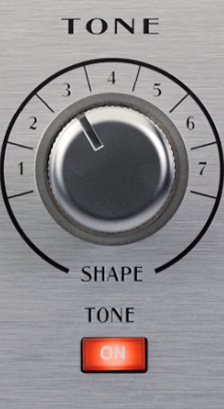
Arcadia U7 Tone Settings
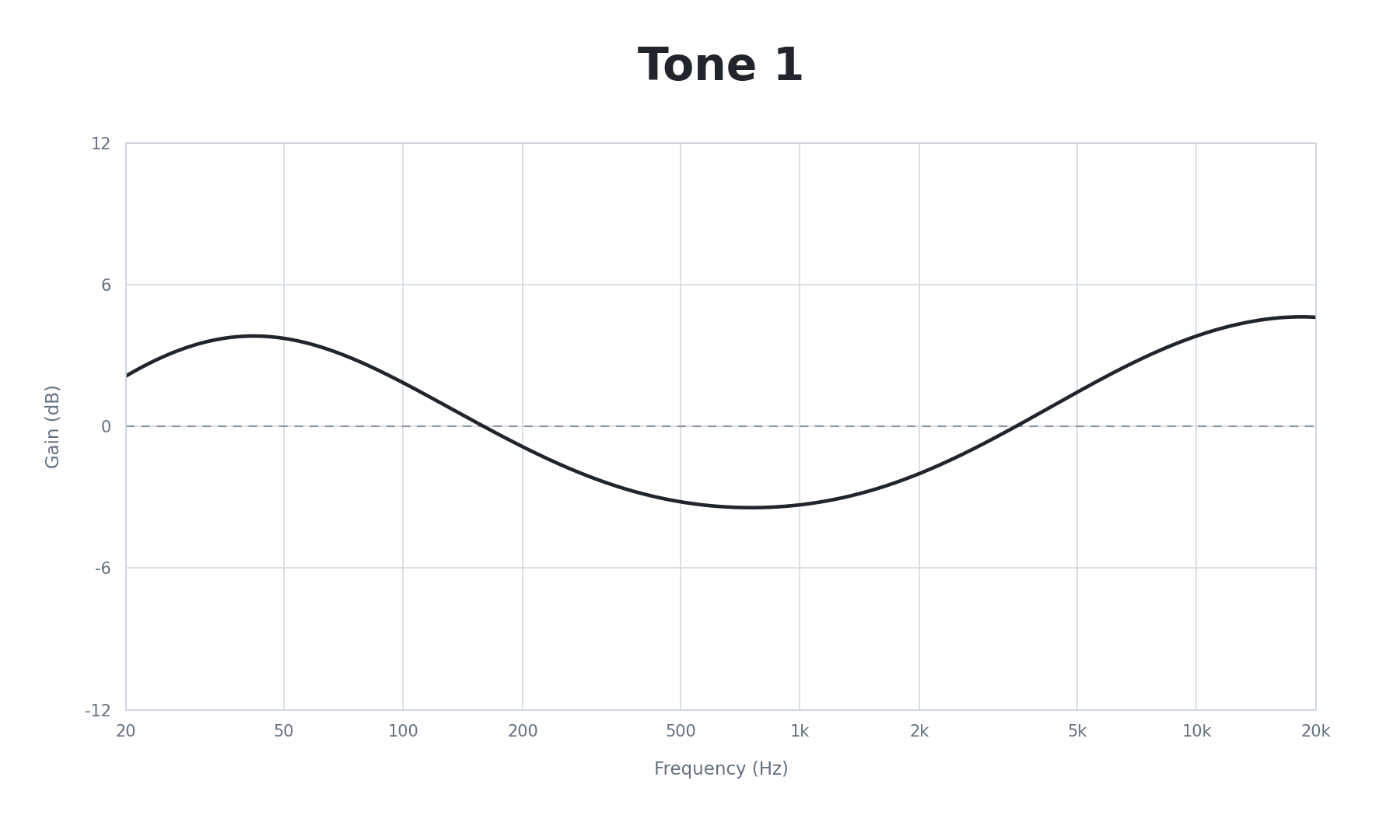
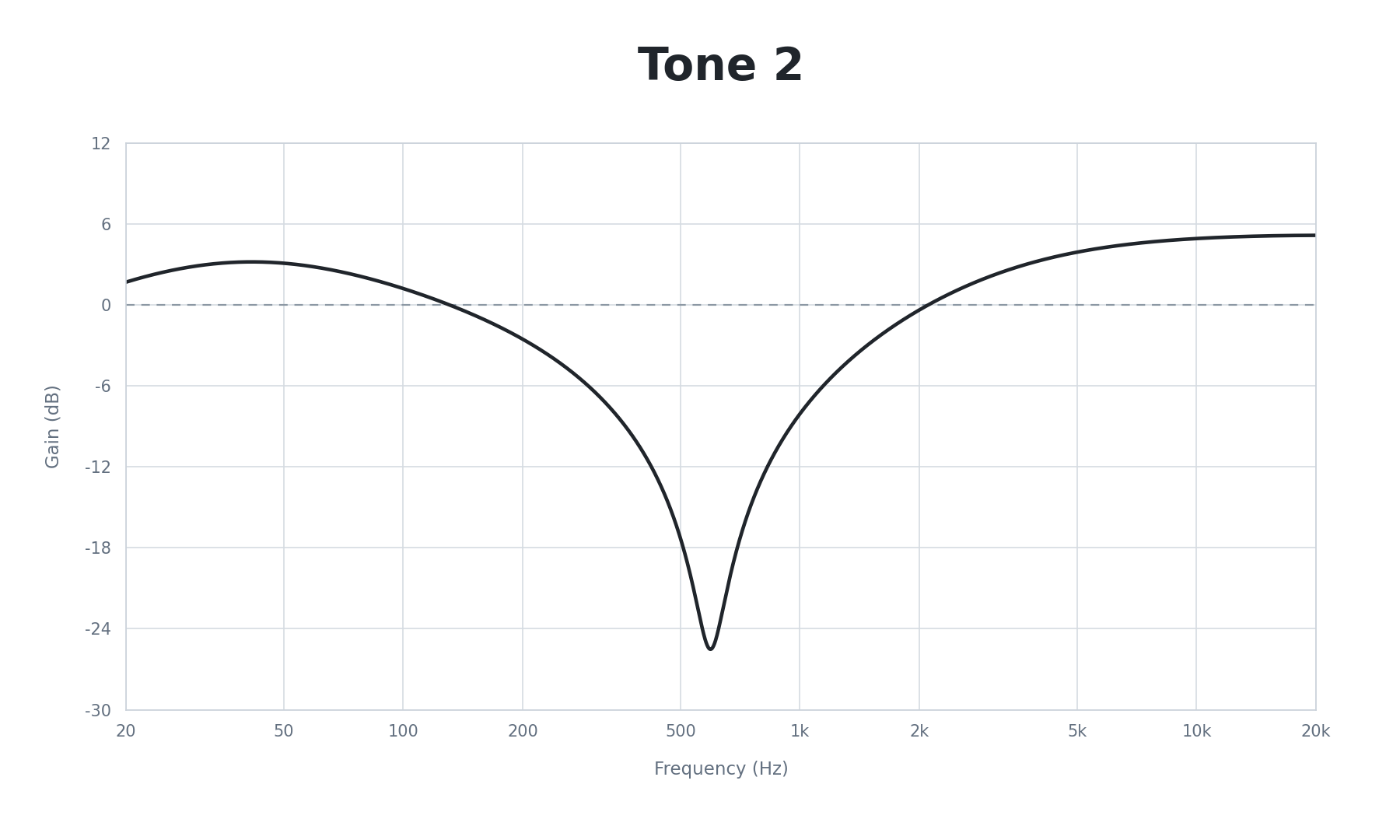
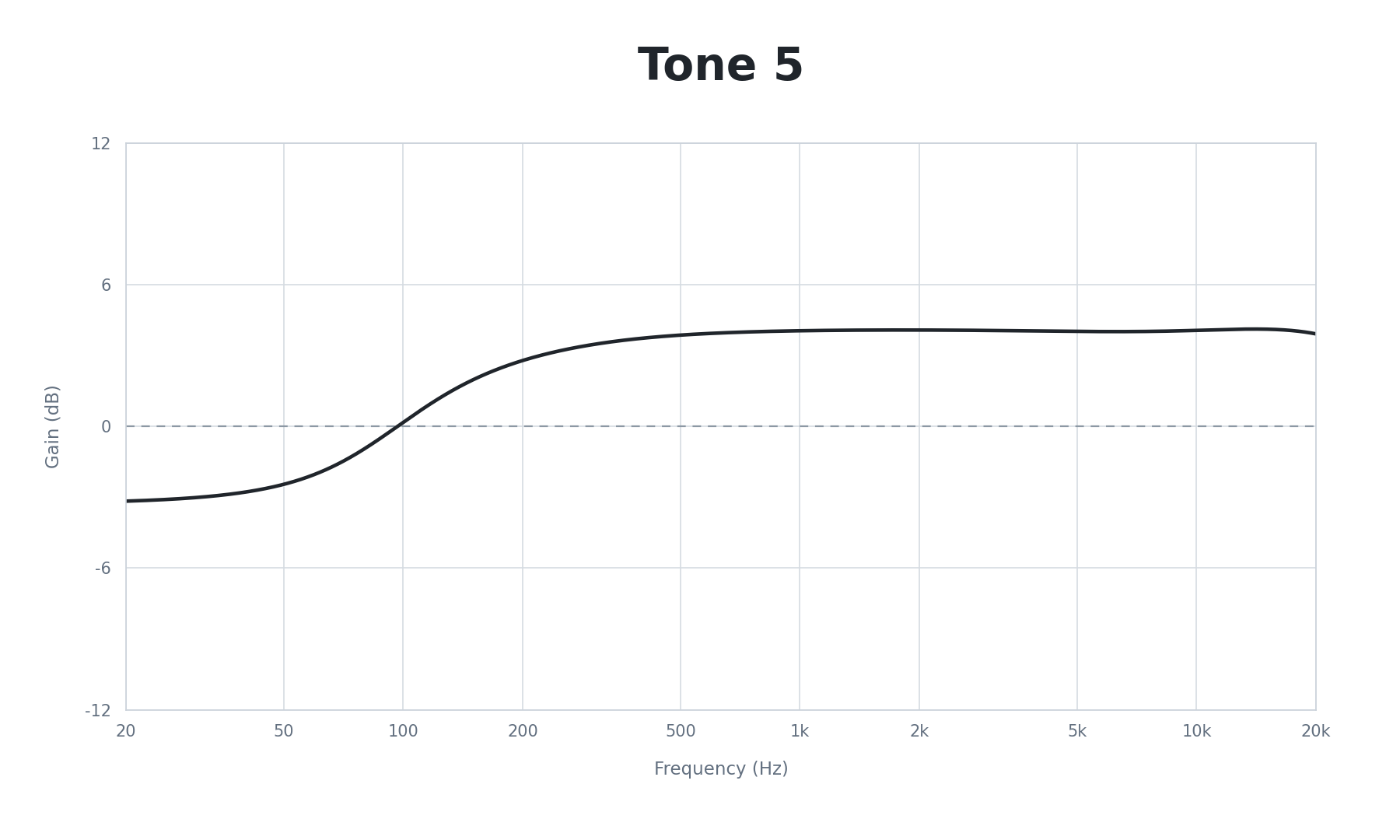
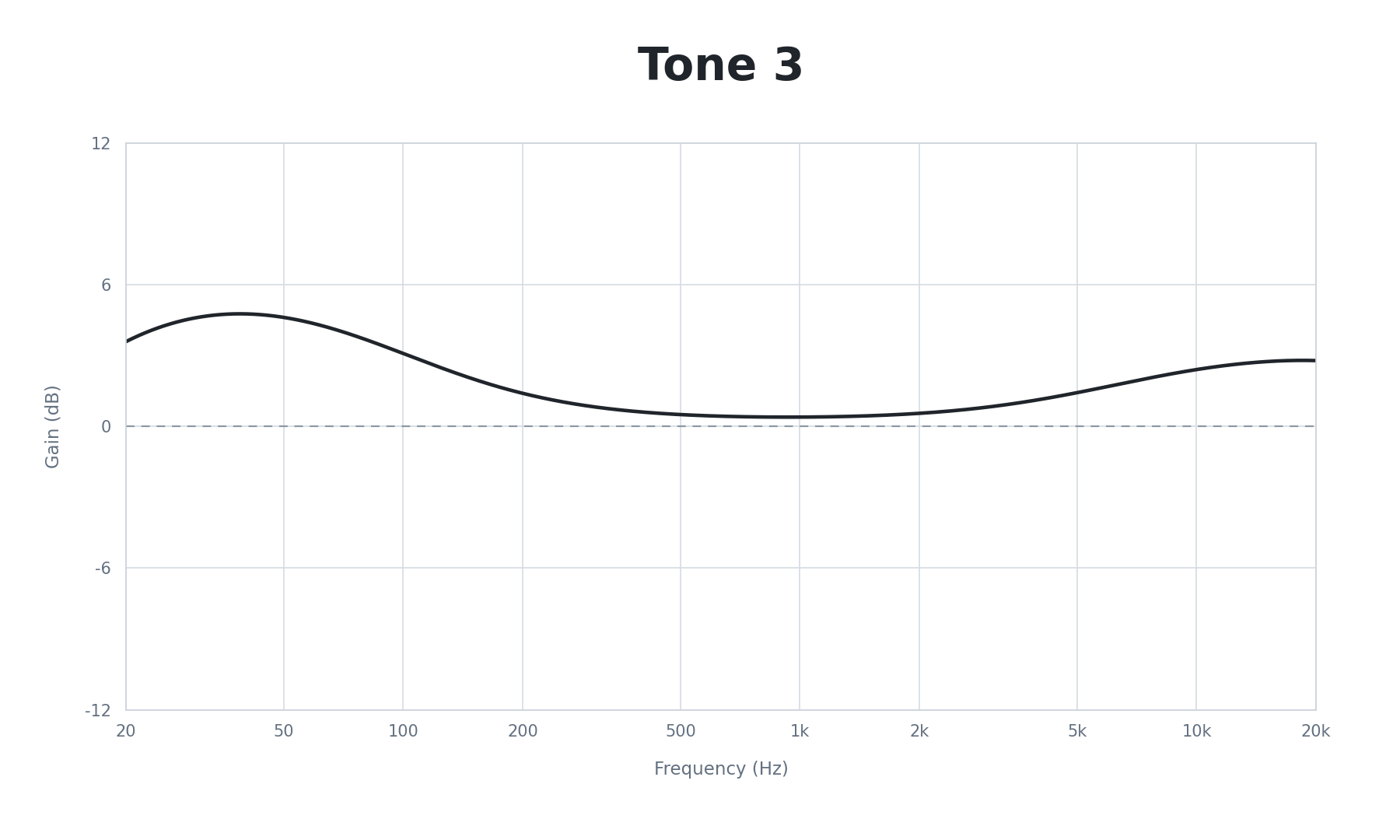
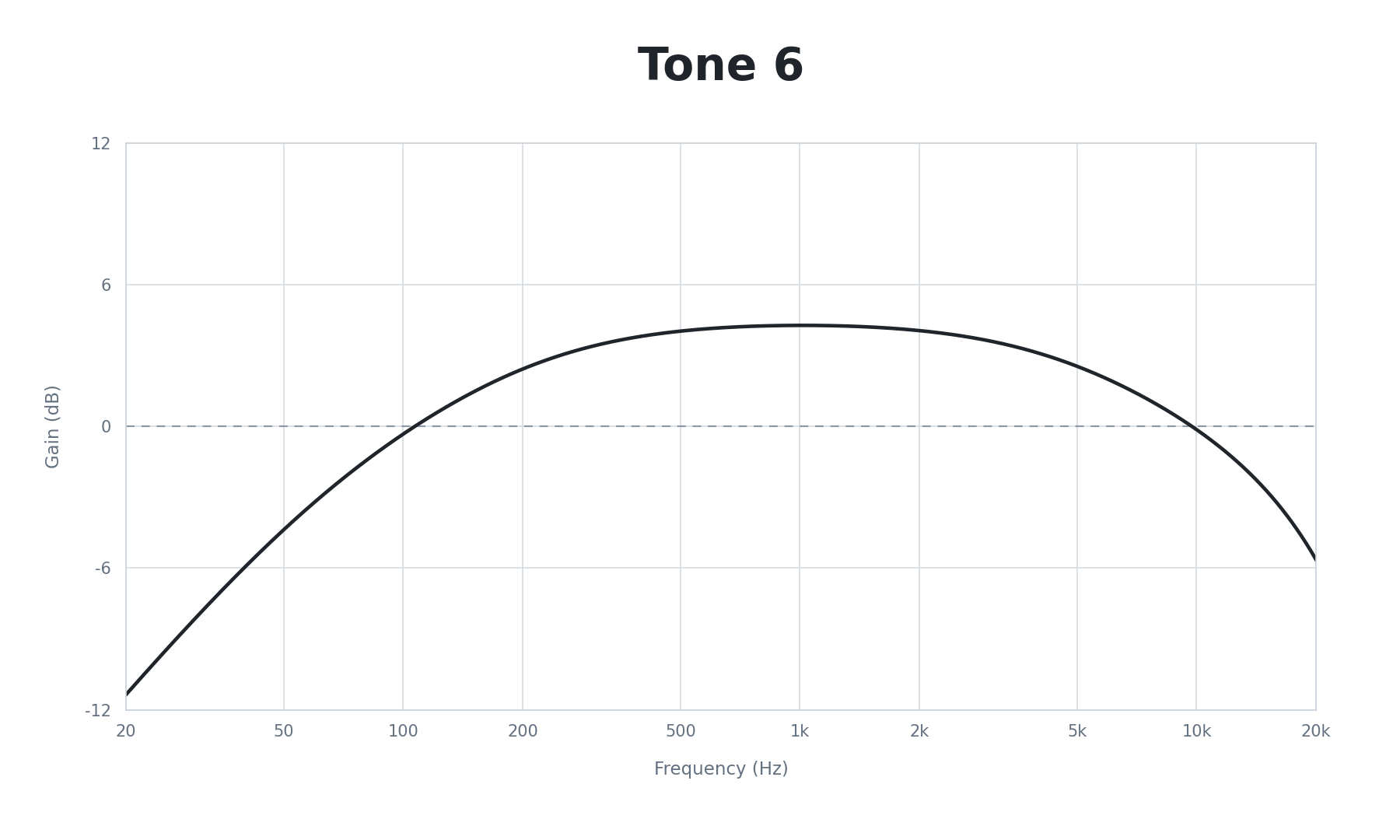
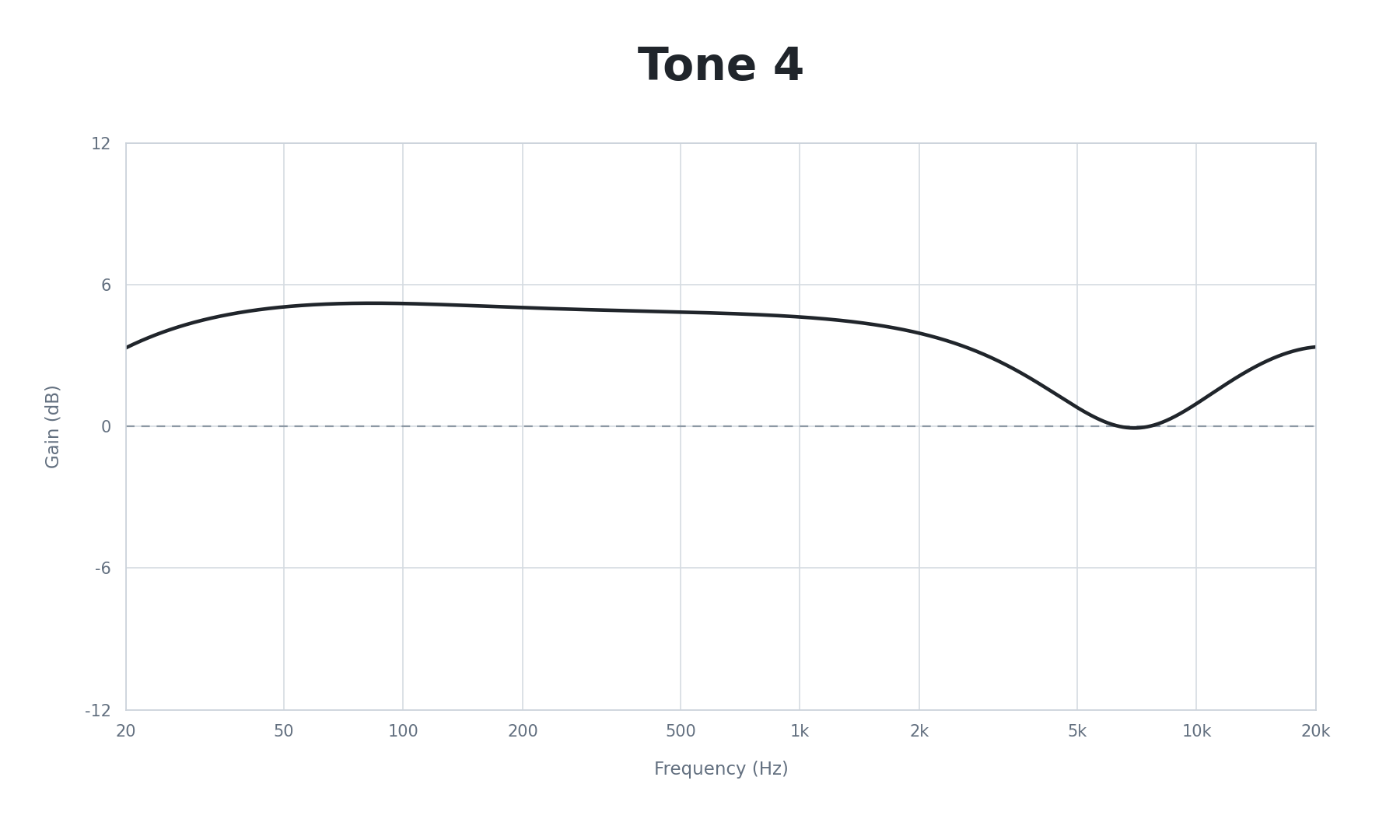
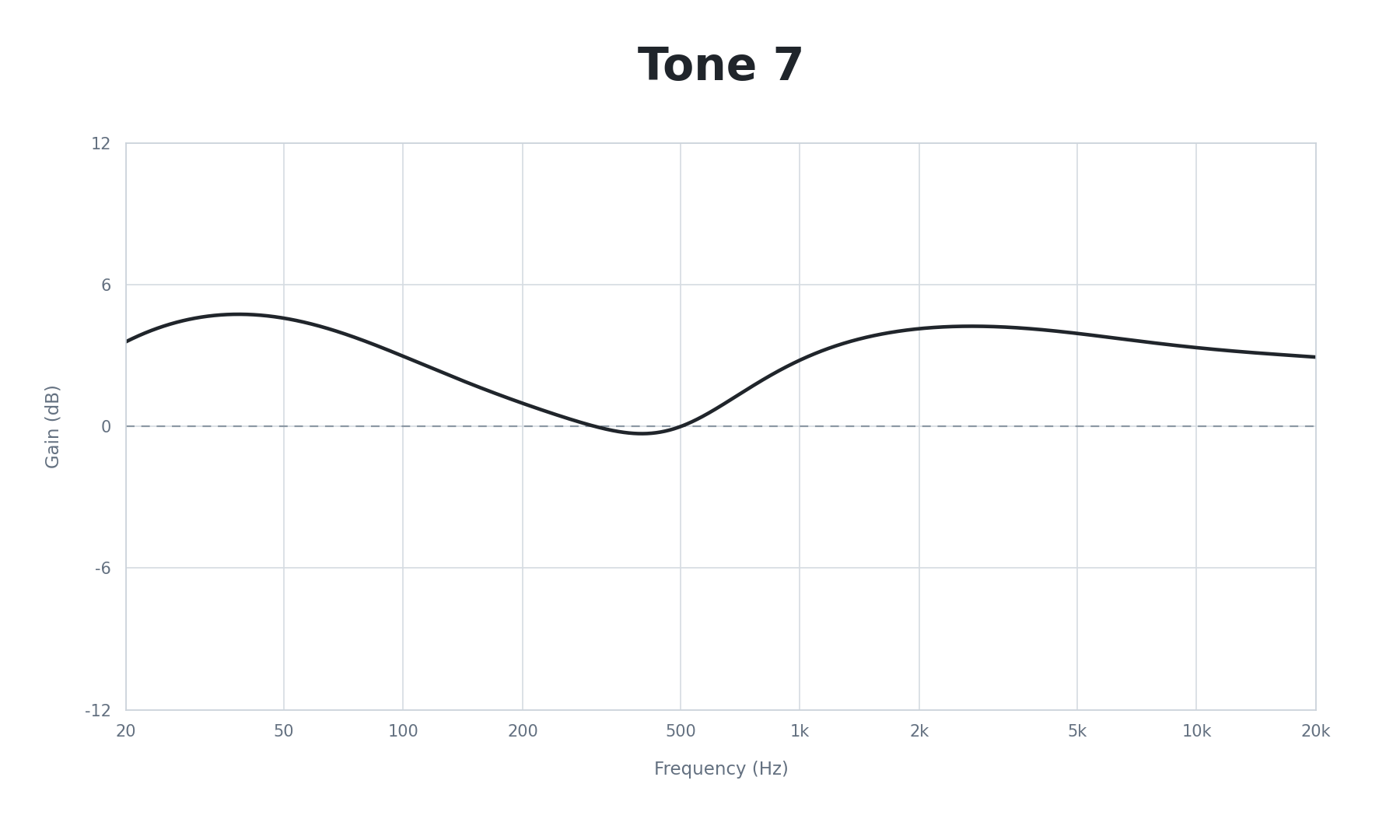
Broad Strokes, Musical EQ.
Arcadia’s EQ curves are intentionally smooth and musical.
Some add low-frequency authority. Others introduce presence and clarity. Several reshape the midrange in ways that help the source settle naturally into a recording.
They are not intended to replace detailed corrective EQ.
They provide the broad tonal decision that comes earlier in the recording chain: deciding how the instrument should enter the production.
System Requirements
macOS
macOS 10.15 through macOS 26
64-bit VST3, AU, and AAX formats.
Native support for Apple Silicon and Intel
Windows
Windows 10 and Windows 11
Available in 64-bit VST3, and AAX formats.
Simple Account-Based Authorization
Licensing is handled directly through your account.
No iLok account. No USB dongle. No separate license manager.
Activate Arcadia U7 directly and manage your licenses from your account at any time.